ASC Conference
Arbeitskreis Sozialwissenschaftliche Chinaforschung- Jahrestagung 2018 Hier erhalten Sie mehr Informationen.

Arbeitskreis Sozialwissenschaftliche Chinaforschung- Jahrestagung 2018 Hier erhalten Sie mehr Informationen.
Im Kontext der Einführung in den Buddhismus (Teil des Moduls Geistesgeschichte) findet ein Gastvortrag statt. Ein führender Mönch vom Fagu-Kloster in Nordtaiwan kommt nach Göttingen und hält einen Vortrag zur buddhistischen Meditation. Sie alle sind herzlich eingeladen, diesen sicherlich spannenden Vortrag zum Buddhismus aus einer Innenperspektive zu besuchen. Sprache: Hochchinesisch mit Übersetzung ins Englische Übersetzer: […]
Program: Opening 13:00-13:10 Prof. Xiaohua Yu (Göttingen), Introducing the program and the participants from University of Göttingen (于晓华教授:介绍会议日程以及哥廷根大学的与会者) Dr. Xu Ning (NJU), Introducing the participants from Nanjing University and IDEI (徐宁博士: 介绍南京大学的与会者以及南京大学产业经济研究院) Presentations: 13:10-16:00 1,Prof. Zhibiao Liu (NJU): Globalization and Advanced Countries-of-Manufacture from a Perspective of Global Value Chain (刘志彪教授:GVC视角下的全球化与建设制造强国) 2, Prof. Krisztina Kis-Katos (Göttingen): […]
Abstract: China gerät immer mehr in den Blick. Präsident Xi Jingping treibt auf vielen Ebenen offen und selbstbewusst den Wiederaufstieg Chinas voran. Als permanentes Mitglied im UN-Sicherheitsrat ist China bereits seit langem ein zentraler Akteur in den internationalen Beziehungen. Die chinesische Führung klammert in ihrem Handeln aus, was ihrer Ansicht nach nicht wichtig ist – […]
Abstract: 摘要: 汉字是汉语学习和教学中的一大难点。本讲座将从以下角度解读汉字教学及学习的相关问题:1. 掌握汉字是学好汉语的前提吗? 2. 汉字学习任务真的那么繁重吗?汉字学习有何理据? 3. 汉字造字法:六书。科学指导还是陈旧概念? 4. 词本位VS字本位,孰优孰劣? 5. 汉字教学有哪些技巧及注意事项? Schriftzeichen gelten als eine zentrale Schwierigkeit beim Erlernen der chinesischen Sprache. Der Vortrag wird die Vermittlung der chinesischen Schrift und deren Problematik aus folgenden Blickwinkeln beleuchten: 1. Muss man die chinesische Schrift erlernen, um Chinesisch zu lernen? 2. Ist es tatsächlich eine so […]
Abstract: Recently scholars in the study of antiquity around the world began to notice a trend of increasing interest in doing comparative studies. How should comparative study, particularly of the ancient world, be conducted, what are the benefits, what are the issues, are still problems that draw debates among scholars. This talk intends to use […]
Abstract: A lecture illustrated with the speaker’s latest field study on Japanese colonial Shinto shrines in Taiwan—the more than 400 Shinto Shrines built by the Japanese colonizers over the 50 years of colonization between 1895-1945—The lecture interprets the political, social and cultural meaning of these Shinto Shrines and their relics in the past and present. […]
All new students in the master program Modern Sinology are cordially invited to join the information meeting on October 12, 2018, at 1pm in room 002 of the ZHG (Zentrales Hörsaalgebäude).
Abstract: This talk will examine some key issues that concern scholars who attempt to figure out the historical roots of our contemporary problems. One the one hand, some scholars have been debating the intellectual and religious cause of the ecological crisis and the extinction of animal species across the global village. For instance, Lynn White […]
Abstract: Recent geopolitical events such as Brexit and the US turning its back on international trade and cooperation create waves of uncertainty in higher education regarding international cooperation, the free movement of students, academics, scientific knowledge, and ideas. Meanwhile China is launching new global initiatives with its New Silk Road (or One Belt One Road) […]
Abstract: In diesem Vortrag geht es um die Darstellung und Wiedergabe von Opern und anderen Bühnenstücken im chinesischen Comic (lianhuanhua 连环画). Dabei wird ein historischer Bogen gespannt, der bei der Bühne als Ausgangspunkt der chinesischen Comicentwicklung ansetzt, sich über die weitere Entwicklung der Comics als Mittel der politischen, kulturellen und technischen Bildung erstreckt und mit […]
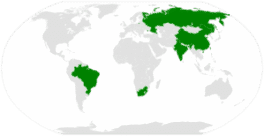
Abstract: In the first decade of the 21st century, five rising powers (Brazil, Russia, India, China, and South Africa) formed an exclusive and informal international club, the BRICS. Although neither revolutionaries nor extreme revisionists, the BRICS perceive an ongoing global power shift and contest the West’s pretensions to permanent stewardship of the existing economic order. […]
Abstract: Die chinesische Vorstellung vom „Geist“ (shen 神) wird oftmals mit der westlichen Vorstellung von der „Psyche“ oder „der Seele“ gleichgesetzt. Doch gibt es im Chinesischen Denken überhaupt Vorstellungen, die unseren Begriffen von Psyche oder Seele entsprechen? Ausgehend von den klassischen Fragen des Leib-Seele Diskurses im Abendland werden wir uns der chinesischen Vorstellung nähern, die […]
Short Bio of the lecturer: Prof Hall earned his PhD from the University of Chicago in 2008 and has held postdoctoral fellowships at Princeton and Harvard, as well as visiting scholar appointments at the Free University of Berlin, Tsinghua University in Beijing, and the University of Tokyo. Prior to joining the University of Oxford, Prof […]
Abstract: In der Chinamode des Barockzeitalters verbindet sich europäische Neugier auf Kurioses und Fremdes mit Projektionen eigener Träume auf das ferne „Reich der Mitte“. Ballette, höfische Opern und Genrestücke der Kammermusik verlangten plötzlich nach chinesischen Klängen. Wie befriedigten die klassischen Komponisten Europas diese Nachfrage und welche Vorlagen nutzten sie? Was wusste man zur gleichen Zeit […]
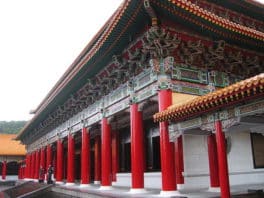
Abstract: The paper investigates the shift of power symbolism represented in Shinto Shrines and Martyrs’ Shrines since the colonial era in Taiwan, through putting architectural/urban design theories into dialogue with political history. Three architectural complexes, Hualien Martyrs’ Shrine, Taipei National Revolutionary Martyrs’ Shrine and the Imperial Palace in Peking are interpreted in material and spatial […]
Short Bio of the lecturer: QIN Yaqing is President and Professor of China Foreign Affairs University (CFAU) and Chancellor of China Diplomatic Academy, Executive Vice-president of China National Association for International Studies (CNAIS) and editor-in-chief of Foreign Affairs Review, the academic journal of CFAU and CNAIS. He was on the resource team for the UN […]
Abstract: Sind manche Schriftsysteme besser als andere? Gibt es sinnvolle und verlässliche Kriterien zur Bewertung von Schriftsystemen? Vor dem Hintergrund dieser Fragen vergleicht dieser Vortrag die chinesische Schrift mit anderen Schriften. Ausgangpunkt ist das in der Überschrift zitierte Verdikt des deutschen Philosophen Georg Friedrich Hegel, das eine positive Beantwortung der Frage nach einer möglichen qualitativen […]
Abstract: This talk will explore some less widely researched topics related to the learning and use of hanzi and pinyin in learners of Chinese as a Foreign Language. First, we will look at how the interword spacing conventions of CFL learners’ first languages affect their Chinese word awareness and their reading of hanzi sentences and […]
Articulating Authoritatian Citizenship in China Greg Distelhorst (MIT) Evaluating the Bureaucracy in China and the US Diana Fu (University of Toronto) Short Bio: Greg Distelhorst: Greg Distelhorst is the Mitsubishi Career Development Professor and an Assistant Professor in Global Economics and Management at the MIT Sloan School of Management. His research explores the social impact […]

Abstract: The discourse about China’s challenge to the liberal world order assumes that such an order exists. This talk argues that there are instead multiple orders in different arenas (military, trade, finance, information, environment, among others), and that there are tensions within and between these orders. China supports some of these orders, wants to reform […]
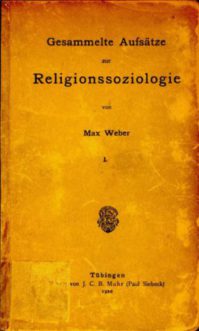
Abstract: This talk attempts to read Max Weber's treatise on Chinese Confucianism and Taoism, contained in his magnum opus Wirtschaftsethik der Weltreligionen, as a critique of a rationalism that Weber sees as the core component of Christian puritanism and as the foundational force for the rise of capitalism in Europe and America. This talk is […]
Abstract: Due to the great interest in learning Chinese as a foreign language (CFL), over the past two decades there has been an increased number of Studies related to Second Language Acquisition in Chinese (SLAC). Though the research field has not yet been fully established with a framework and more specific guidelines, there have been […]
Abstract: This lecture explores the emergent Chinese exceptionalism in order to search for a possible research agenda from interdisciplinary approaches. It will focus on modern times from Mao to the present, especially the ideological formations of Sinicization of Marxism (Chinese Marxism or Mao Zedong Thought),and “Socialism with Chinese Characteristics” (from Deng to Xi). To begin […]

Symposium: Academia meets Activism: Feminism in China Voices of Struggle explores the complex entanglements between activism and academia in transnational perspective. What does it mean to be an engaged or activist scholar today? How should we think about the connections/separations between the two spheres of activism and academia? And how can activists and academics best […]

Abstract: Is the demand for codified international criminal justice antithetical to the demand for agonistic decolonization of global political, military, and economic power? Or can the establishment of global norms of justice be made compatible with, and even grounded upon, anti-colonial and democratic interventions? By analysing Indian involvement in the Tokyo Trial (1946-48), this paper […]

Abstract: The functional operation of conventional Chinese welfare regime was closely linked to institutionally created forms of discrepancies and borders entrenching the status differences between different social classes as well as among welfare clients from different social spaces (e.g. rural or urban areas). Since the Millennium an unprecedented and fast expanding social policy in the […]
Abstract: Maritime trade during the late Ming was characterised by the intermingling of tributary trade, private trade and piracy. The establishment of the ban on maritime trade (海禁 haijin) gave way to a scarcity of goods entering China and to a great profitability of smuggling activities. While the ban on maritime trade never succeded in […]